
Masculinity and identity therapy Copenhagen
Find a way of being a man that actually fits you
I help you sort what you inherited about manhood from what is yours
- Last updated October 16, 2026
What I want you to know about being a man today
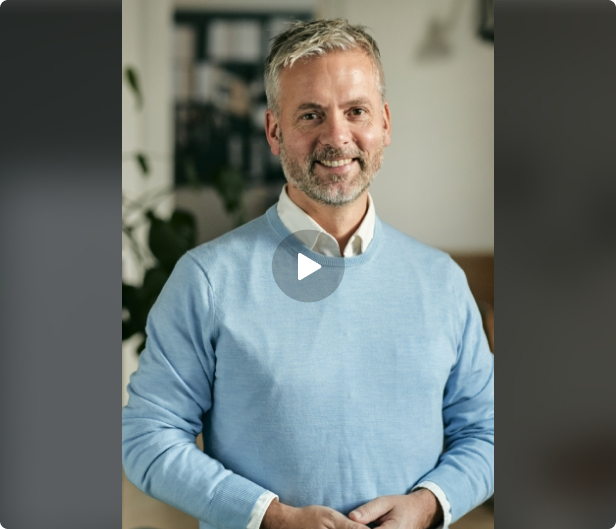
In this short video, I explain why so many men feel unsure what kind of man they are meant to be, and how we can work out what fits you.
You can also send me an email
At a glance
Masculinity and identity therapy Copenhagen helps you look at the man you have become, the man you were told to be and the man you want to be. We meet one to one for 1-hour appointments with 50 minutes of therapy, in English or Danish, at my practice in central Copenhagen or online.
I help you sort out which ideas about manhood you inherited and which you would choose. It is part of my psychotherapy for men. When one root of the question stands out, I offer focused work on the father wound and on shame in men.
You can ask for a free discovery call, book a first session, read my client policy or write to me.
Is this the right page for you?
This is for you if…
Masculinity and identity therapy Copenhagen is for men who are no longer sure what being a man means for them. The old picture of the strong, silent provider does not fit, and the newer expectations feel vague or contradictory. You want a way of being a man that you can respect and actually live in.
- You feel you are supposed to be tough at work and tender at home, and you end up feeling like a fake in both places.
- You grew up with a father who never spoke about feelings, and you have no inner picture of a man who does.
- You compare yourself with other men at the gym, on LinkedIn or at dinner parties, and always come out slightly short.
- You were raised in one culture and live in another, and their ideas of a proper man pull you in opposite directions.
- You are decisive and clear at work, yet at home you go along with almost everything and wonder where your backbone went.
- You have plenty of drive and ambition, but you cannot say what it is really for, beyond reaching the next target.
- You feel uneasy around other men, and there is no male friend you could tell the plain truth to about your life.
- You suspect your partner sees you as kind but not quite solid, and that thought stings more than you let anyone see.
This is probably not for you if…
Some questions about manhood need a more specific kind of help. If one of these is closer to your situation, the linked page will serve you better.
- The question is less about being a man and more about who you are as a person after a big change. → identity crisis therapy
- Your relationship with your own father, present or absent, is the heart of what you want to work on. → father wound therapy
- A heavy, private sense of not being good enough as a man is what you most want help with. → shame in men
- You hide your own needs to keep everyone happy and avoid conflict at almost any cost. → nice guy syndrome therapy
- You want help with stress, anger or low mood as a man, without a particular focus on identity. → psychotherapy for men
- You are in your forties or fifties, and the question has arrived as restlessness about the life you built. → midlife crisis therapy for men
- You are in your twenties and still working out who you are away from your parents and your old friends. → therapy for young men
- You are in immediate danger, or you are thinking about ending your life. Please call 112, or 1813 for urgent mental health help in the Capital Region.
You can also send me an email
Client reviews
The reviews shown here are shared by clients who have worked with me in therapy and chosen to reflect on their experience. They are collected via Google and displayed through an independent verification service, offering an open and transparent picture of how my work is experienced.
Mark’s view
“In my experience, men who doubt their masculinity are often not short of manhood. They are short of a grown man who ever showed them what it looks like. So they borrow a picture from the internet, the gym or their father, and then fail to fit it. Underneath, I hear one voice asking ‘Am I man enough for anyone to want to stay?’ and another saying ‘Nobody needs to tell me who to be. I will work it out by myself.’ Some men carry both at once: ‘Show me how, but do not come close enough to see that I do not know.’ I do not think you need a new script. You need to find the mature man who is already in you and give him room to grow.”
Mark Colclough, MA, psychotherapist and EFT couples therapist
Meet Mark, psychotherapist and EFT couples therapist
I am Mark Colclough, MA, a psychotherapist and EFT couples therapist specialising in expats and international couples. I work in English and Danish, from my practice in central Copenhagen and online.
Practising since 2004, I bring a bicultural perspective to work with individuals and couples across languages and cultural contexts. My work integrates depth-oriented psychotherapy with approaches such as integral psychotherapy, Gestalt therapy, Jungian psychoanalysis, and object relations theory. I also have specialist training in attachment theory, narcissism, and borderline personality disorder.
For support with life between cultures, explore expat psychotherapy or expat couples therapy. My practice is supported by ongoing training and supervision. To read more about my background, training, and approach, visit About me.

The importance of supervision
Good therapy begins with good supervision
I regularly meet with experienced senior psychotherapists in Denmark and abroad to reflect on my work, challenge my thinking, and continue developing my skills. This ongoing process supports the quality of my individual and couples therapy, helping me offer thoughtful, ethical, and effective care.
My focus is simple: excellence, integrity, and impact.
Connect with me:
If you want me to call you ASAP, or if you want to book me, use the buttons below.
You are welcome to get in touch. We can clarify what’s the right therapy for you.
You can also send me an email
A typical situation
Kenji is 37. He grew up in Osaka with a Danish mother and a Japanese father, and designs games in Vesterbro. His father worked 6 days a week and hardly spoke. Kenji swore he would be different: he does bedtime, cooks and talks about feelings. Yet his partner says he never decides anything, and Kenji has started lifting weights at 6 every morning, as if he could build a man from the outside in.
I would start with the 2 men Kenji has been trying not to become and trying to become: his father, and the one in the gym mirror. In our first session, he would probably notice that when he rejected his father’s silence, he threw out his father’s firmness with it. That is a hopeful place to begin.
I have presented this clinical example as a compound of 22 years of clinical practice.
This is when you need masculinity and identity therapy with me
You have tried to work out on your own what kind of man to be, and the answers keep slipping away from you.
There is no right moment or wrong reason to start asking what kind of man you are. If something feels off in how you carry yourself as a man, at work, in love or as a father, that is enough. You do not need a diagnosis or a crisis first. In 22 years of practice, I have sat with many men who could not name what was missing, and I recognise when that unease has become a pattern.
I will help you see which beliefs about manhood are running your life, what keeps them in place and what needs to change. Use the 6 questions below to judge whether this is the moment to book.
Do you feel you are acting the part of a man rather than being one?
If so, take it seriously. Many men describe a constant performance: the firm handshake, the confident voice in meetings, while inside they feel unsure and tired. It costs energy, and it shows as restlessness, irritability or an evening drink that has quietly become 2.
I would look at where the script came from and who you are performing for. If you know this feeling, book a session with me and we will look at it straight.
Do you want to be both strong and soft, and feel you cannot be both?
Both wishes are real, and they protect different things. One part of you wants to be solid and relied on. Another wants to be close and, now and then, held. You may swing between them, hard at work and spineless at home.
Neither side is the problem. I help you hear what each one guards, often a boyhood lesson about being too hard or too soft. The aim is to let them work together, so your strength has warmth in it and your warmth has a spine.
Do you keep checking whether other men respect you?
Plenty of men do, quietly. A friend’s joke at your expense or a colleague who talks over you, and you replay it for days. You measure yourself against other men’s salaries, bodies and confidence.
The wish to be respected is legitimate, and I will not shame it. I help you calm the alarm that fires before there is any evidence, often an old fear of being the boy who did not measure up, and say what bothered you instead of sulking or showing off.
Do you want men around you, then back away when they come close?
That happens more than men admit. You join a football team or a running club, enjoy it, then stop turning up. A friend opens up over a beer and you make a joke. Closeness with other men feels both needed and risky.
I help you find the exact moment wanting turns into leaving. Something specific usually sets it off: competition, or a fear of being found weak. I respect why you keep your distance, and I will help you stay a little longer each time.
Do you go quiet when someone asks what you really feel?
Many men do. When a conversation turns personal, your mind goes blank or you find a job that needs doing. It feels like control. The price is that people slowly stop asking.
This quiet is usually a way of not being overwhelmed, and I will not shame you for needing room. I help you stay present a little longer and say “give me a moment to find the words” before the silence hardens into a wall.
Have you lost track of what you want as a man, beyond what others expect?
Years of being the reliable one, the provider or the nice guy can leave you unsure who is inside the role. You may feel competent and hollow at the same time. That does not mean you are broken. It means you have been adapting for a very long time.
I help you separate what you took on from what is genuinely yours. I will challenge you when you hide behind a role, but I will not hand you a ready-made masculinity. The aim is to know what kind of man you want to be.
If one of these questions hit home, request a free call to talk it over, or book a session if you are ready to start.
You can also send me an email
Contact me
Request a personal call
Your journey is unique, and you do not have to walk it alone.
Fill out your contact information and I will call as soon as possible.
Support when you need it most.
Your message is treated confidentially and used only to respond to your enquiry. It is not sold or used for advertising. Please avoid including detailed or highly sensitive clinical information in this form. Information about processing, service providers and retention is available in the privacy policy.
Get in touch
What masculinity and identity therapy with me will help you do
Knowing where your ideas about manhood come from matters, but you also need to live differently at home, at work and with other men.
I will help you see the picture of manhood you have been living by, notice where it serves you and where it traps you, and make changes that the people around you can feel. A man who understands his father perfectly and still repeats him has not got very far.
I take an active part and push back when you talk yourself small. As a student of men’s work since 2010, I bring it in to add to and deepen my training as a psychotherapist, never to replace it. Eli Buren, a dear friend and mentor, has been a central influence, and I have sat in his work many times. One lens I often bring in comes from Robert Moore and Douglas Gillette’s book “King, Warrior, Magician, Lover”. They describe 4 sides of a mature man: the King who brings order and blesses others, the Warrior who acts and holds a boundary, the Magician who understands and contains, and the Lover who feels and connects. Each has a shadow side when it is still a boy’s version or has been wounded. These 6 questions show what we work towards.
How will I help you see what is really behind your doubts as a man?
I help you separate the real question from the noise around it. Online advice, gym culture and your father’s voice all have opinions about the man you should be. Underneath there is usually something specific, such as a blessing you never got from an older man.
I tell you what I think is going on and which stories keep you stuck, such as “real men just get on with it”. In Moore and Gillette’s language, we often find a King who was never blessed, or a Warrior with nothing worth fighting for. When you are ready, book a session with me and we will start with your last week.
How can you notice the old script before it takes over?
You can learn to spot the first signs, and that is where choice begins. Before you puff yourself up or fold in an argument, there is heat in your face or a thought such as “do not look weak”. Catch that moment, and you have room to choose.
In sessions, we slow the sequence down. This is the Magician’s work: seeing clearly what is going on inside you without being run by it. Then we practise a different response you can use at the dinner table.
How can you hold your ground without turning hard or caving in?
Steadiness is not the same as toughness. It means staying present enough to choose your response. Many men know only rigid control or giving in. The mature Warrior has a third setting: calm, clear and able to say no without needing to win.
I help you notice pressure earlier in your body. I will also be clear that this needs practice between sessions, a few minutes on most days rather than one good talk a week.
How can you say what you want without bullying or pleading?
Clear speech starts with knowing what you feel, what you want and what is yours to carry. Men who were raised to be tough often push. Men who were raised to be nice often hint, then resent it when nobody guesses. Both end up unheard.
I help you find words that are direct, warm and in proportion, and I challenge both silence and expecting your partner to read your mood. We rehearse real conversations until you can say plainly what you mean and still stay kind.
How can you make a big choice from your own centre, not from pride or fear?
Decisions get clearer when you separate fear, duty, habit and other men’s opinions from what you actually value. Pride says never back down. Fear says play it safe.
I help you weigh your options and what each would ask of you. This is where the King matters: the part of you that can see the whole picture and take responsibility for a choice. I will give you my view and name it when you are avoiding the decision, but the choice stays yours.
What does it look like to live as the man you actually are?
Real change has to reach your Monday mornings, not just my room. You may need firmer boundaries, a male friend you confide in, or a purpose larger than your next pay rise. David Deida, in “The Way of the Superior Man”, writes about living from your deepest purpose and staying present in love. His title is about a man growing beyond his own limits, not about standing above anyone. In Moore and Gillette’s terms, this is also where the Lover gets room again, the part of you that feels, enjoys and connects.
I help you decide what needs to change and what is worth keeping. The aim is that your choices come from the man you are, not the man you fear being seen as.
You can also send me an email
What happens when you begin masculinity and identity therapy with me
You do not need a theory of masculinity or the right words. We begin with how you are living as a man right now.
When you begin, I listen, help you name what feels wrong and give the work a direction from the first session. Many men start with “I am not sure this is a real problem”, and that is a perfectly good start.
This is focused, individual psychotherapy: structured work on you, your history and your relationships. If the main trouble lives between you and a willing partner, couples therapy offers long-term relational development and healing. If you already sense this will take a while, my therapy discounts and bundles lower the cost and give you the safety of a plan we agree together.
What happens in our first session together?
I ask what made you book now, where you feel least like the man you want to be, what you have tried and what you hope will change. I also ask about your father and the culture you come from, where most of the picture was drawn.
By the end, I suggest a direction, and you decide whether my way of working suits you. If you would like to talk before you book, request a free 30-minute discovery call.
When is individual psychotherapy right for questions about manhood?
Individual work is right when the question lives in you: how you see yourself as a man, your history, your choices and how you show up with other people. You can look closely at your relationships without bringing anyone along.
On your own with me, you get continuity and honest challenge from one session to the next. To see how this fits into my work as a whole, Psychotherapy Copenhagen describes my structured individual work.
When is couples therapy a better place to start?
Couples therapy is the better choice when the relationship itself needs sustained care. If your partner feels you are unreachable, or one of you chases while the other retreats, working on it together often helps more.
With both of you in the room, I help you see the loop between you, own your part in it and build a safer way of being together. Couples therapy Copenhagen is long-term relational development and healing, and some men do this individual work first and bring their partner in later.
How often should you come?
It depends on how pressing things feel and how much room you have. Identity questions need enough rhythm for you to try something new and report back.
I recommend weekly or fortnightly sessions to start with. I will tell you honestly if the gaps are too long or if we can space things out. A few sessions back-to-back over several days are also possible when travel or work makes a regular slot hard.
When does a bundle make sense for this work?
A bundle makes sense when you know the work will take several sessions and you want to stop deciding after each hour whether to come back. For many men, that small decision is exactly where the work quietly ends.
Buying a bundle means significant savings and a structured plan you can rely on. I will tell you honestly whether one fits the likely scope of your work. You can compare the options on therapy discounts and bundles and in the cards below.
How will we know when the work is done?
The work has done its job when you feel more at home in yourself as a man, can make choices you stand behind and no longer need the same support to keep going. You can be firm and warm in the same conversation.
I review progress openly and do not encourage dependence on me. Sessions can thin out, pause or stop when the work has done what it needed to. Coming back years later, when fatherhood, loss or ageing raises the question again, does not mean the first round failed.
How it works with me
- Start with a free 30-minute call, or book your first session straight away. A couple of lines about what brings you is enough.
- We meet for a 1-hour appointment with 50 minutes of therapy, at Møntergade 4 in central Copenhagen or online, in English or Danish, any day between 08:00 and 21:00 Copenhagen time, subject to availability.
- At first we meet weekly or every second week. Between sessions, you try out at home and at work what we have talked about.
- Every few sessions, we look at what has shifted and what has not. Together we decide whether to keep going, change the pace, turn to one theme such as your father, or finish.
- If you expect several sessions, a therapy bundle saves you 10 per cent and gives you a clear plan from the start. You can see the bundles just below.
Save with a prepaid session bundle
How the bundle works
- Current bundle savings are shown on the Pricing page.
- Your bundle is valid for 180 days from the date of purchase.
- The bundle can only be used for the type of session stated on your invoice.
- If you request a refund, sessions already used are recalculated at the standard single-session price.
- The administration fee applied to a bundle refund is shown on the Pricing page.
- VAT follows the type of therapy included in the bundle: VAT-exempt sessions remain VAT exempt, while VAT-liable sessions include applicable VAT.

Compare with nearby options
Not sure this is the right place to begin? Here is how it compares with the options men asking these questions most often consider.
| Option | Choose it when | Pace |
|---|---|---|
| Masculinity and identity therapy (this page) | You are unsure what kind of man you are, or want to be. | Weekly 1-hour sessions at first |
| Psychotherapy for men | You want help as a man with stress, anger or low mood more broadly. | 1-hour sessions at a pace you choose |
| Father wound therapy | Your father, present or absent, is at the centre of it. | A steady course of 1-hour sessions |
| Nice guy syndrome therapy | You keep the peace and hide your needs in order to be liked. | Weekly or fortnightly sessions |
Frequently asked questions
What is masculinity and identity therapy with you?
Masculinity and identity therapy with me is individual psychotherapy for men who are unsure what being a man means for them, or who feel trapped in a version of manhood that does not fit. You can meet me in central Copenhagen or online, in English or Danish.
It is depth-oriented psychotherapy, with men’s work as one lens among others.
When should I come to you about this?
Come when your sense of yourself as a man is costing you sleep, confidence, closeness or friendships, or when you keep acting a part you do not believe in. You do not need to wait for a crisis.
I look at how long the doubt has been there and what you have stopped doing because of it. If you feel lost about who you are more generally, my article on not knowing who you are anymore may help you put it into words.
Can therapy help me feel like a man without becoming someone I am not?
Yes. The aim is not to make you tougher, softer or more like anyone else. It is to help you grow into the man you already are, underneath the borrowed pictures. I do not do quick fixes.
In my clinical experience, men often find that what they lacked was not masculinity but permission: an older man who said “you are allowed to be this”. I would focus with you on where that permission was missing and what you can now give yourself.
Is this going to be about politics or how men ought to behave?
No. I am not interested in telling you what men in general should be, and I do not take sides in the public arguments about it.
I treat masculinity as something living and personal, not a problem to be fixed. We look at the strengths you already have, the ones that are still young or wounded, and how to use them well with the people you love.
Why do I either act tough or give in completely?
Both are attempts to feel safe when something feels threatening. Some men harden, argue or take control. Others go quiet, agree and resent it later. Neither makes you a bad man. You learned it, probably early.
I help you see which way you tend to move, what that move is trying to protect and what it costs. Then we build a third option: standing firm while staying warm, and saying no without attacking.
What do we actually talk about the first time?
We start with your life now: work, home, friends and where you feel least like yourself. I ask about the men who shaped you, especially your father, and what you were taught a man should be.
You do not need to prepare. “I am not sure what I am looking for” is a fine opening line. When you are ready, book your first session, or begin with a free discovery call if that feels easier.
How many sessions will I need?
Plan for a course over a few months rather than a single conversation, usually weekly or every second week to begin with.
Based on 22 years of practice, I recommend that we agree a first stretch and then review it honestly together. You then decide with me whether to continue, come less often or stop.
Would a men’s group help me more than individual therapy?
It can help alongside it. Many men open up most easily side by side with other men, doing something together, and the men’s communities that have sprung up across Denmark show how much that matters. Individual therapy is the better start when you need to look closely at your own history and patterns without an audience.
My page on therapy and men’s groups explains how the 2 can work together.
What does masculinity and identity therapy with you cost?
Sessions are booked as 1-hour appointments with 50 minutes of therapy, like all my individual psychotherapy. The current price is on my prices page. You pay by invoice and bank transfer.
Buying several sessions together as a bundle saves you 10 per cent and gives the work a structured plan. The options are on therapy discounts and bundles. Pay the invoice on the same day from a Danish bank account, and you save a further 3 per cent.
How do I begin with you?
Book your first session online, or ask for a free 30-minute discovery call if you want to get a feel for me first. A short note about what brings you is plenty.
If nothing in the calendar fits, or it feels urgent, contact me directly. Acute situations can usually be seen within days.
You can also send me an email
My approach and values
My mission
My mission is to help individuals, couples and families rediscover connection, communicate with understanding, and build a stronger, more loving relationship that can thrive through any challenge.
My vision
My vision is to create a world where every person in my therapy room feels supported, connected, and empowered to grow, and to step one step closer to your Self.
Explore other services I offer

Individual psychotherapy

Join the newsletter community
Join the newsletter and receive five practical tips for nurturing healthy relationships – with yourself and the people around you.
No spam. Just mindful insights.