
Anxious attachment therapy Copenhagen
Feel less afraid of being left, and more at ease when you love
I help you quieten the fear of losing people and trust your own worth
- Last updated October 23, 2026
A few words from me about the fear of being left
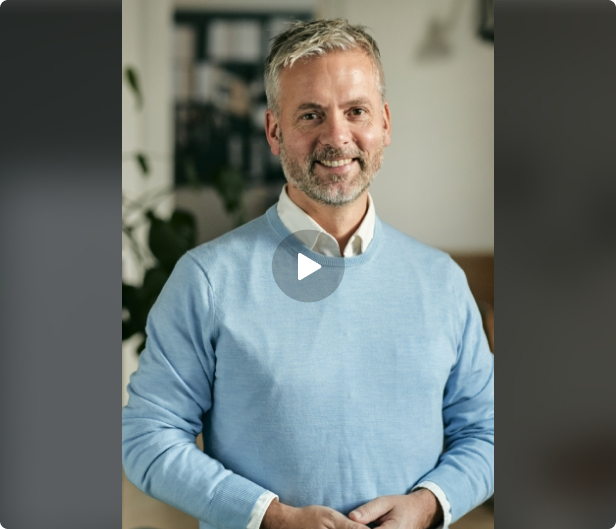
In this short video, I explain why the urge to hold on tighter makes sense, and what begins to change when you learn to settle that fear from the inside.
You can also send me an email
At a glance
Anxious attachment therapy Copenhagen helps you when the fear of being left, forgotten or replaced takes up too much of your love life and your friendships. You see me on your own, in 1-hour appointments with 50 minutes of therapy, in English or Danish, at my practice in central Copenhagen or online.
I help you understand where the fear began, what it is trying to secure and how to calm it without needing constant reassurance from someone else. This is a sub-branch of attachment therapy, which belongs to my wider psychotherapy. If you recognise yourself more in pulling away, avoidant attachment therapy may fit better, and if you swing between both, see disorganised attachment therapy.
You can begin by booking a first appointment, or with a free discovery call. My client policy sets out the practical terms, and you are welcome to send me a message with any question.
Is this the right page for you?
This is for you if…
Anxious attachment therapy Copenhagen is for adults whose love comes with a near-constant fear that the other person will leave. You may notice every change in someone’s tone, read meaning into silences and need to hear again that you are still wanted. You want to feel calmer and more secure in yourself, without having to love less.
- You check whether your message has been read, and the minutes before a reply feel far longer than they are.
- You go over a short or flat text from your partner again and again, looking for what it really means.
- You find it hard to enjoy an evening out with friends when the person you love has not been in touch.
- You apologise quickly after an argument, even when you were not in the wrong, just to make the distance end.
- You feel a wave of panic when someone you care about says they need time alone, even for one evening.
- You give far more in relationships than you receive, and you are afraid that asking for more will drive people away.
- You stay in relationships that do not feel good, because being alone frightens you more than being unhappy.
- You have been told you are too much or too needy, and part of you has started to believe it.
This is probably not for you if…
Fear of losing people can take more than one form, and sometimes a neighbouring page is the better fit. If one of these describes you more closely, follow the link.
- You mostly back away from closeness and feel uncomfortable when someone depends on you. → avoidant attachment therapy
- You crave closeness and then panic and push away, often in the same week or even the same evening. → disorganised attachment therapy
- You have stopped noticing your own needs because you are so focused on keeping everyone else happy. → codependency and people pleasing therapy
- You understand your pattern already and now want to build a steadier sense of trust. → building secure attachment
- You recognise several attachment patterns in yourself and are not sure which one matters most. → attachment therapy
- Your difficulties stretch well beyond love and friendship, and you want room to explore all of them. → psychotherapy
- Your worry reaches far beyond relationships and shows up in your body, your work and your health. → anxiety therapy
- You are in immediate danger, or you are thinking about ending your life. Please call 112, or 1813 for urgent mental health help in the Capital Region.
You can also send me an email
Client reviews
The reviews shown here are shared by clients who have worked with me in therapy and chosen to reflect on their experience. They are collected via Google and displayed through an independent verification service, offering an open and transparent picture of how my work is experienced.
Mark’s view
“If I look back over recent client cases, the people with this fear who changed most were not the ones who learned to need less. They were the ones who stopped treating their need as shameful. Many arrive convinced they are too much. I disagree. The fear of being left was a sensible answer, once, to love that came and went. Underneath, I hear ‘Have I done something wrong?’ and ‘Why have you gone quiet?’. Often, close behind, comes a harder voice: ‘Fine, then I will manage without anyone.’ My work is not to make you need people less, but to help you feel safe enough inside that you can ask for what you need, plainly, and survive the wait for an answer.”
Mark Colclough, MA, psychotherapist and EFT couples therapist
Meet Mark, psychotherapist and EFT couples therapist
I am Mark Colclough, MA, a psychotherapist and EFT couples therapist specialising in expats and international couples. I work in English and Danish, from my practice in central Copenhagen and online.
Practising since 2004, I bring a bicultural perspective to work with individuals and couples across languages and cultural contexts. My work integrates depth-oriented psychotherapy with approaches such as integral psychotherapy, Gestalt therapy, Jungian psychoanalysis, and object relations theory. I also have specialist training in attachment theory, narcissism, and borderline personality disorder.
For support with life between cultures, explore expat psychotherapy or expat couples therapy. My practice is supported by ongoing training and supervision. To read more about my background, training, and approach, visit About me.

The importance of supervision
Good therapy begins with good supervision
I regularly meet with experienced senior psychotherapists in Denmark and abroad to reflect on my work, challenge my thinking, and continue developing my skills. This ongoing process supports the quality of my individual and couples therapy, helping me offer thoughtful, ethical, and effective care.
My focus is simple: excellence, integrity, and impact.
Connect with me:
If you want me to call you ASAP, or if you want to book me, use the buttons below.
You are welcome to get in touch. We can clarify what’s the right therapy for you.
You can also send me an email
A typical situation
Mikkel is 33, a Danish teacher who spent his twenties working in Melbourne and moved back to Copenhagen last year. His girlfriend Sara has started a demanding new job and replies to his messages hours later than before. Mikkel finds himself checking her social media during lessons and composing long texts he then deletes. When she gets home late, he is cool and distant, then lies awake afraid she is losing interest. Sara says nothing has changed. He wants to believe her and cannot.
I would start with the moment the fear first rises in an ordinary day, and what Mikkel does with it in the next 10 minutes. In our first session, we would probably find that the waiting feels familiar, older than Sara, and connected to a father who was loving but often away for months at a time.
I have presented this clinical example as a compound of 22 years of clinical practice.
This is when you need anxious attachment therapy with me
You have tried to stay calm, give people space and not ask too much, and still the fear of being left keeps returning.
You do not need a crisis, a breakup or a professional label to come and see me about this. If the fear of losing people is shaping your days, your mood and your choices, that is reason enough. Many people put off getting help because they feel embarrassed by how strong the feeling is. In 22 years of practice I have sat with this fear many hundreds of times, and I can usually tell when ordinary worry about a relationship has hardened into a pattern worth working on.
My professional view is clear: the fear can soften, and the way to that is not to argue yourself out of it. Together we trace what triggers it, what it hopes to secure and what feeds it, so that you gain a moment of choice before it carries you off. The 6 questions below will help you decide whether to book.
Is waiting for a reply taking over your day?
If it is, take it seriously. Waiting can quietly swallow hours. You keep your phone face up on the desk, glance at it during meetings and feel a drop in your stomach every time it buzzes with someone else’s name. You find it hard to concentrate until you have heard back, and when the reply comes you read it closely for signs of how things really stand. By evening, you are tired from a day spent on alert.
I would want to know how often this happens, with whom and since when. Waiting that unsettles you during one hard week is different from waiting that unsettles you in every relationship you have had. If it is the second, it deserves care, and I will help you see it clearly. You can book a session with me whenever you feel ready.
Do you want to be close, yet feel you must hide how much you need?
Both are true, and they pull against each other for good reasons. One part of you wants to say plainly that you miss someone, that you need to hear from them, that you are scared. Another part has learned that showing too much need makes people retreat, so it holds back, plays it cool and waits. You end up feeling the need strongly and expressing it badly, sometimes all at once in a message you regret.
Neither part has to win. Each is protecting something: the first protects your connection, the second protects you from rejection. I help you understand them both, so that you can show your need in a form that is honest and proportionate, rather than hiding it until it bursts out. The goal is not to need less. It is to need without shame.
Do you need to hear again and again that you are still loved?
Many people do, and it is exhausting for them and for those around them. You ask “Are we okay?” more often than you would like. The answer helps, but the relief fades fast, and soon you need it again. You may test people without meaning to, going quiet to see if they notice, or mentioning someone else to see if they mind. Underneath is a simple question: can I count on you to stay?
Wanting reassurance is human, and there is nothing silly about it. What we work on is the alarm that sends you looking for it before anything has actually gone wrong. I help you notice the alarm early, understand what it is reacting to and find ways to settle yourself first, then ask directly when you still need something. My article on anxious attachment explains the pattern in more depth, and my article on relationship anxiety looks at how it shows up between partners.
Do you chase closeness, and then pull back hurt when it does not come?
Often, yes. You reach out, send another message, suggest another plan. When the response is slower or cooler than you hoped, something in you snaps shut. You go quiet, stop replying and tell yourself you do not care. It feels like protection, and for a while it is. Then the fear returns, and you reach out again, sometimes with an apology for the silence.
I help you slow this loop down and find the moment where hope turns into hurt. Usually a small sign of distance is enough to tip it. I have compassion for the withdrawal, because it is a way of guarding yourself from the pain of not being met. Still, I will ask you to look at what the silence costs the relationship, and we will practise saying “That hurt, and I still want you close” instead of disappearing. If the swing is the main pattern in your life, disorganised attachment therapy looks at it in more detail.
Does a partner’s need for space feel like a door closing on you?
It can feel exactly like that. Your partner says they need an evening alone, or a weekend with friends, or simply some quiet after work, and you hear rejection. You may agree and then sulk, or you may argue, or you may give them the space and feel abandoned the whole time. It can be hard to believe that someone can love you and want distance at the same time.
My view is that the other person’s wish for space is not the problem, and neither is your discomfort with it. Together we explore what the distance wakes in you, usually something far older than this relationship, until you can stay steady while the person you love is elsewhere. You learn to ask “When will we have time together?” instead of fighting the space itself. If you are with a partner who regularly needs distance, my sibling page on avoidant attachment therapy may help you understand them too.
Have you shaped yourself to be easy to love, and lost yourself on the way?
Many people with this fear become very skilled at being whatever someone else needs. You agree, adjust, accommodate and rarely make demands, hoping that if you are easy enough, nobody will leave. Bit by bit, your own tastes, opinions and wishes can fade from view. You might also carry a quiet sense of shame, as if your needs were a burden to others. This is no defect. It is a strategy that once kept you safe.
I help you find your way back to your own preferences, opinions and limits. That often means looking at the family you grew up in, where love may have depended on being good, helpful or quiet. I will steer, and I will push back when you make yourself small, while the question of who you are stays firmly with you. What we want is for you to take up your full size and still be loved. If this pattern goes far beyond romantic relationships, codependency and people pleasing therapy looks at it more widely.
If this sounds like you, you can talk it through on a free call first, or book a session straight away.
You can also send me an email
Contact me
Request a personal call
Your journey is unique, and you do not have to walk it alone.
Fill out your contact information and I will call as soon as possible.
Support when you need it most.
Your message is treated confidentially and used only to respond to your enquiry. It is not sold or used for advertising. Please avoid including detailed or highly sensitive clinical information in this form. Information about processing, service providers and retention is available in the privacy policy.
Get in touch
What anxious attachment therapy with me will help you do
Knowing where the fear comes from helps, yet real relief only arrives when you start to wait, ask and settle yourself differently.
Our work turns insight into practice. You will get to know the moment the fear rises, recognise the habits that keep feeding it and change things you can feel in your relationships and in your own body. Many people with this pattern already know a lot about it, and some can describe it precisely. Yet knowing why you are anxious about being left does not, on its own, make the waiting any easier.
My 22 years have taught me that a passive therapist is of little use to this fear. I say what I notice, including the ways the fear appears between us, for instance when you leave a session worried you said too much. I will guide you and challenge you kindly when an explanation keeps you stuck. Below are the 6 areas we work on.
How will I help you find out what your fear of being left is really guarding?
I help you separate the fear from the stories it tells. The checking, the replaying and the late-night messages are real, but they are responses, not causes. Below them usually sits a conviction, perhaps “once someone truly knows me, they go”, and a body that tenses in advance for loss. When you can see that belief and that bracing clearly, they lose some of their power.
I bring structure and my own professional reading. You will hear my reading of what drives the fear, which situations ignite it most and which stories hold you in place, for example “I just pick unavailable people”. Sometimes that is true. Often it is only part of the picture. When you are ready to look, book a session with me.
How can you notice the fear rising before it takes the wheel?
You can learn to catch it early, and that changes a great deal. The fear tends to arrive in a recognisable order: a small trigger, such as a delayed reply, then a tightening in your throat or stomach, then a story about what it means, then the urge to act. Each step is a place where you can pause. Most people only notice at the last step, when the message has already been sent.
In sessions, we go through recent moments slowly, step by step, so you can see your own sequence. Recognition alone will not be enough, so we practise what to do at each point instead: breathing out slowly, naming the fear to yourself, waiting 10 minutes before you reply. You try it between sessions, and we look together at what happened.
How can you calm the panic when someone feels far away?
Settling is not the same as acting indifferent or forcing a smile. It means staying steady enough to see the situation as it is, rather than as the fear paints it. Sometimes the distance really does signal a problem that needs talking about. Often it does not. Settling your body first is what lets you tell which is which.
I help you recognise how the panic feels in your body and what it is reacting to, often an old experience of waiting for someone who did not come. We find specific ways of calming that suit you, from slowing your breathing to holding on to something that reminds you of being loved. This takes practice at home, and I will say so plainly. Repeating it daily is how your body learns that waiting can be survived.
How can you ask for closeness without apologising or pleading?
Begin by pinning down the actual request, which is usually smaller and clearer than the fear makes it seem. Perhaps you want a goodnight message when your partner is away, or a plan for the weekend, or a clear answer about where things stand. Fear tends to blur this into a general anxiety, which then comes out as complaints, hints or long explanations that make you feel even more exposed.
We look for wording that is honest, concrete and sized to the moment, for example “It helps me a lot when I hear from you before you go to sleep.” I will notice when you bury a need, and equally when you hand someone else the whole task of keeping you calm. We often rehearse a conversation together until you can have it without apologising for wanting something.
How can you decide whether to stay or go, without fear making the choice?
You can only choose freely once the dread of being alone is separated from what you really want. That fear can keep you in a relationship that is not good for you, because any connection feels safer than none. It can also make you leave early, before you can be left. Either way, the choice is being made by fear, not by you.
I help you look at your relationship honestly: what it gives you, what it costs, and what you would need for it to work. You will get my frank opinion, and I will say so when you sidestep, though staying or going is your decision alone. If one relationship tends to follow straight on from the last, therapy for always being in a relationship is worth a look.
What does it feel like to love without the fear in charge?
Lasting change shows up in ordinary moments outside the therapy room. You notice your partner has not replied, feel the familiar jolt and then carry on with your evening. You ask for what you want and can wait for the answer. You enjoy time on your own without counting the hours. You may also need to make changes in your life, such as firmer limits on how much you give, or fewer relationships with people who leave you guessing.
Some things need to change and some do not, and we sort out which together. Your warmth, your loyalty and your attentiveness to others are not the problem. The aim is not to make you cooler or more detached. It is to help you love from a place of more security, where your needs and your worth do not depend on someone else’s mood. Building secure attachment describes that next step in more detail.
You can also send me an email
What happens when you begin anxious attachment therapy with me
Come as you are, without a tidy account of your past. I start with the fear as it lives in your days now.
At the start, my job is to hear how the fear runs through your present life, help you put its core into words and give our sessions a clear direction. Nobody expects a diagnosis or a history of every past relationship. The present is our starting point.
This work is a focused part of my psychotherapy: structured individual sessions on your inner world and the way you love. If the fear is mostly played out with one partner who is willing to work on it with you, couples therapy offers long-term relational development and healing. When you already know the work will need time, therapy discounts and bundles give you real savings and the safety of a plan agreed in advance.
What happens in our first anxious attachment session?
First, I want to hear why now, where the fear bites hardest, how you currently cope and what you hope will change. I listen for the moments where the fear takes over, and for what it seems to be protecting. There is no need to tell me everything before we can start.
Before we finish, you get my first impressions and a proposal for where to go. Whether my approach suits you is then your call. If you would like to ask me something before booking, request a free 30-minute discovery call.
When is individual therapy the right choice for this fear?
Individual therapy is right when the fear lives in you and appears in more than one relationship. That is the case for most people with this pattern. It may show up most clearly with a partner, but it also shapes friendships, work and how you treat yourself, and we can explore all of it without anyone else in the room.
One to one, you get a steady thread from session to session, clear direction and frank feedback. A steady, reliable relationship with a therapist is in itself part of what helps this fear soften. More about my structured individual work is on Psychotherapy Copenhagen.
When is couples therapy better than working on this alone?
Go for couples therapy once the relationship itself is the main problem and your partner wants to join in. When you reach and they retreat, round and round, each wounding the other in the same familiar spot, changing that loop together tends to work better than tackling your fear alone.
With both of you present, I help each partner see the loop, own their side of it and find more secure ways to be together. That is long-term relational development and healing, not a quick fix for one argument. You can read more on Couples therapy Copenhagen. Some people begin with individual work on their fear and then move to couples work later.
How often should you come for anxious attachment therapy?
How often we meet depends on how hard the fear is hitting you, what your life has room for and how much continuity the work calls for. With this pattern, regular contact matters, because a long gap between sessions can itself stir the fear of being forgotten. A steady rhythm helps the work feel safe enough to go deeper.
I usually recommend starting weekly. You will hear from me if the gaps are too wide for anything to take hold, if a short run of closer sessions would help, or if we can safely spread out. Back-to-back sessions over a few days are an option too.
When does a bundle make sense for anxious attachment therapy?
Choose a bundle when it is clear the work will run over several sessions and you would rather not re-decide each time. For this fear, a planned course can be reassuring in itself. You know when we will meet next, and you do not have to wonder whether the work will continue.
Bundles offer significant savings and the safety of a structured plan. We can weigh up together whether one matches the scope of what you want to work on. The full range is on therapy discounts and bundles, and the cards below show the main choices.
How will we know when this fear has loosened enough to stop?
We are close to done when the fear has stopped steering your relationships and you can manage without a weekly session. It may still flicker, but you spot it, calm it and ask for what you need without panic. Waiting becomes uncomfortable rather than unbearable.
We look at progress together, openly, and I will not keep you in therapy longer than is useful. With this pattern, how we finish matters. We plan the ending together and in good time, so that it does not feel like another loss. Sessions may become less frequent or pause. Returning one day with a fresh concern says nothing bad about the work we did.
How it works with me
- Book a free 30-minute call or your first session. Add a line about how the fear of being left shows up for you, so I can see whether this focus fits.
- Your first session is a 1-hour appointment with 50 minutes of therapy, only you and me, at Møntergade 4 in central Copenhagen or online, in English or Danish. Sessions are available from 08:00 to 21:00 Copenhagen time, 7 days a week, subject to availability.
- We usually begin with weekly sessions, so the work has continuity and you are not left waiting long between meetings. Between sessions, you practise noticing and settling the fear in real situations.
- Every few sessions we pause to look at how your waiting, asking and responding have shifted. From that review we agree whether to carry on as we are, spread the sessions out or begin preparing to finish.
- If you expect several sessions, a therapy bundle saves you 10 per cent and gives you a clear plan from the start. You can see the bundles just below.
Save with a prepaid session bundle
How the bundle works
- Current bundle savings are shown on the Pricing page.
- Your bundle is valid for 180 days from the date of purchase.
- The bundle can only be used for the type of session stated on your invoice.
- If you request a refund, sessions already used are recalculated at the standard single-session price.
- The administration fee applied to a bundle refund is shown on the Pricing page.
- VAT follows the type of therapy included in the bundle: VAT-exempt sessions remain VAT exempt, while VAT-liable sessions include applicable VAT.

Compare with nearby options
Unsure whether this page is the right starting point? The table sets anxious attachment therapy beside its nearest neighbours.
| Option | Choose it when | Pace |
|---|---|---|
| Anxious attachment therapy (this page) | Fear of being left or unwanted shapes how you love and how you wait. | Weekly 1-hour sessions at first |
| Attachment therapy | Several patterns feel familiar and you want to see how they fit together. | Weekly or fortnightly 1-hour sessions |
| Avoidant attachment therapy | You mostly retreat from closeness rather than chase it. | Weekly 1-hour sessions at first |
| Codependency and people pleasing therapy | You lose yourself keeping everyone happy, not only a partner. | A planned course of 1-hour sessions |
Frequently asked questions
What is anxious attachment therapy with you?
Anxious attachment therapy with me is one-to-one psychotherapy for adults whose closeness to others is shadowed by a strong fear of being left, forgotten or not mattering. It helps you understand where that fear came from, how it plays out today and how to feel more secure without needing constant reassurance. I offer it in English or Danish, in central Copenhagen or online.
Anxious attachment, sometimes called preoccupied attachment, is not a fixed part of your personality. It is a learned strategy for keeping love close. My approach goes deep, using attachment theory and the object relations tradition. This page is a sub-branch of attachment therapy within my psychotherapy.
When is the right moment to see you about this fear?
Come when the fear is costing you sleep, concentration, self-respect or relationships, or when you notice that you stay in situations that hurt because leaving feels worse. Unbearable is not the threshold. If it bothers you, that is enough.
Over 22 years I have come to weigh 3 things: how often the fear rises, how many relationships it touches and how much of your energy it eats. If it is present in most of your close relationships, it deserves proper attention. For words to describe it, try my article on fear of abandonment.
Can anxious attachment really change, or is this just who I am?
Yes, it can change. Anxious attachment is a learned way of staying close to people, often shaped by love that was warm but unpredictable. What was learned can be relearned, and many adults develop much more security over time. I cannot promise how fast or how far, and there are no shortcuts.
In my clinical experience, the shift comes when you have repeated experiences of someone staying, both in therapy and in your life, and when you learn to calm the fear yourself rather than waiting for others to do it. I would focus with you on both: understanding the old fear and practising new ways of meeting it.
Am I too needy for anyone to stay with me?
No. Needing closeness is not a flaw. What can strain relationships is the way the need comes out when it is driven by fear, through checking, testing or clinging. That can change, and changing it does not mean pretending you need less.
I take your need seriously and I do not shame it. At the same time, I will help you look honestly at how it affects the people you love, and what you can do differently. Many people discover that once they can ask clearly and calmly, they are met far more often than they expected.
Why do I chase people who seem to pull away?
Often because distance feels familiar, and familiar can feel like love. When someone is a little hard to reach, the old fear wakes up, and the intensity of wanting them can feel like attraction. Steady, available people can even seem dull at first, simply because they do not set off the alarm. This says nothing bad about you. It is a pattern you learned, usually long before you chose a partner.
I help you recognise the pull towards people who keep you guessing, understand where it comes from and notice what you feel with people who are reliable. Then we work on letting steadiness feel safe rather than boring. If instead you keep ending up on your own, therapy for wondering why you are single takes that question up.
What actually happens when I first come to see you?
We start with how the fear shows up now: a recent moment, a relationship, a pattern you are tired of. I ask about what you feel in your body, what you tell yourself and what you do next. A few questions go back to your early relationships, since this fear rarely starts in adulthood. You leave with my initial sense of things and a suggested route.
There is nothing to prepare. Some people worry beforehand that they will come across as too much, and that worry is welcome in the room too. Whenever it suits you, reserve a first session or begin with a free discovery call.
How many sessions will I need?
Plan for several months of regular meetings, mostly weekly to begin with. This fear tends to change through repeated experience rather than a single insight, so continuity matters. Some people feel a real difference within a few months. A pattern rooted in early loss or a very unpredictable childhood usually takes longer.
Experience tells me it helps most to agree a defined first stretch and then look back on it honestly. At that point we check how your waiting, asking and feeling have moved, and choose together what comes next.
Should I come on my own, or bring my partner?
Start on your own if the fear follows you from relationship to relationship, if you are single, or if you want to understand your own part first. Come as a pair when the loop between you and your partner is plainly the issue and both of you want to change it.
Individual work on this fear is part of my psychotherapy practice. When your partner will not take part, couples therapy alone lets you work on the relationship by yourself. Undecided? A free call is a good place to work it out.
What does anxious attachment therapy with you cost?
Anxious attachment therapy is individual psychotherapy, and you book it as one-hour appointments with 50 minutes of therapy. My prices page shows the current price. You pay by invoice and bank transfer.
If you expect to come regularly for a while, a bundle saves you 10 per cent and gives you the safety of a structured plan. Details are on therapy discounts and bundles. Transfer the amount on the day from a Danish bank account and you save another 3 per cent.
How do I book anxious attachment therapy with you?
You can book your first session online now, or request a free 30-minute discovery call if you want to talk first. A few words about what you are struggling with is all I need.
Should no time fit, or should something urgent have happened, write to me directly. If a breakup or a silence has left you frightened, I can usually offer a time within days, because I hold space for urgent situations. Book now, and we will start with the fear as it is today.
You can also send me an email
My approach and values
My mission
My mission is to help individuals, couples and families rediscover connection, communicate with understanding, and build a stronger, more loving relationship that can thrive through any challenge.
My vision
My vision is to create a world where every person in my therapy room feels supported, connected, and empowered to grow, and to step one step closer to your Self.
Explore other services I offer

Individual psychotherapy

Join the newsletter community
Join the newsletter and receive five practical tips for nurturing healthy relationships – with yourself and the people around you.
No spam. Just mindful insights.