
Panic attack therapy Copenhagen
Help to stop fearing the next panic attack
I help you understand what your body is sounding the alarm about
- Last updated October 18, 2026
What I want you to know about your panic attacks
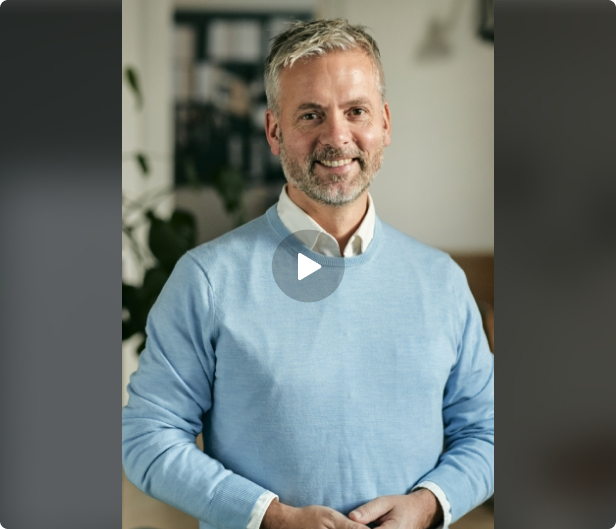
In this short video, I explain why the fear of the next panic attack often does more damage than the attack itself, and how we start to take that fear apart.
You can also send me an email
At a glance
Panic attack therapy Copenhagen helps you when sudden waves of intense fear, with a racing heart, breathlessness and a sense of losing control, have started to frighten you and shrink your life. Each appointment is one hour with 50 minutes of therapy, just you and me, in English or Danish, at my practice in central Copenhagen or online if travelling feels too much right now.
I help you understand what your body is reacting to, stop organising your days around the fear of the next attack and get back the places and plans you have given up. Panic attacks are one form of anxiety therapy, within my wider psychotherapy.
When you feel steady enough to take a step, book a session or start with a free discovery call. My client policy sets out how I work, and you can always send me a message first.
Is this the right page for you?
This is for you if…
Panic attack therapy Copenhagen is for adults who have had one or more sudden attacks of intense fear and now live with the dread of the next one. The attacks may come out of nowhere or in particular places, and they often feel physical and dangerous. You want to understand what is happening in your body and stop letting the fear decide where you can go.
- You have had a sudden attack of fear with a pounding heart and tight chest, and were sure you were having a heart attack.
- You have been to the emergency department or your GP, been told your heart is fine and still do not feel safe.
- You sit near the door in meetings, cinemas and restaurants, so you can get out quickly if it starts again.
- You avoid the metro, the bridge, the supermarket queue or a long flight, because that is where it once happened.
- You notice every flutter in your chest, every dizzy moment and every shallow breath, and wonder if this is the start.
- You wake suddenly at night with your heart racing, a sense of dread and no idea what set it off.
- You carry water, medication or your phone at all times, and feel exposed if you leave any of them behind.
- You used to feel free to travel and go out, and you want that freedom back rather than a life built around safety.
This is probably not for you if…
Panic can be part of several different difficulties, and some of them need a more specific kind of help. Where one of the descriptions below sounds closer to your own experience, the linked page will probably serve you better.
- Your anxiety is a steady background of worry and tension, rather than sudden attacks. → anxiety therapy
- Your main problem is a mind that keeps looping on decisions and what-ifs. → overthinking therapy
- Frightening, unwanted thoughts or images are what you fear most, more than the physical surge. → intrusive thoughts therapy
- Your panic is almost always about being watched, judged or embarrassed by others. → social anxiety therapy
- The panic began after a frightening event, and memories of it keep returning. → trauma therapy
- The attacks have suddenly become frequent this week and you need help within days. → acute psychotherapy
- The attacks are tied to exhaustion and overload at work or at home. → stress therapy
- You are in immediate danger, or you are thinking about ending your life. Please call 112, or 1813 for urgent mental health help in the Capital Region.
You can also send me an email
Client reviews
The reviews shown here are shared by clients who have worked with me in therapy and chosen to reflect on their experience. They are collected via Google and displayed through an independent verification service, offering an open and transparent picture of how my work is experienced.
Mark’s view
“If I look back over recent client cases, what strikes me about people with panic attacks is how often the panic arrives just when life has finally become calm. The holiday, the quiet Sunday, the week after the deadline. The body waits until it is safe enough to release what it has been holding. Underneath, I hear ‘What if I collapse and nobody comes?’ and, side by side with it, ‘I must never need anyone to rescue me.’ Some people want someone close by at all times and cannot bear to be watched while it happens. Panic is not your body failing. It is your body finally speaking, and it is worth listening to what it says.”
Mark Colclough, MA, psychotherapist and EFT couples therapist
Meet Mark, psychotherapist and EFT couples therapist
I am Mark Colclough, MA, a psychotherapist and EFT couples therapist specialising in expats and international couples. I work in English and Danish, from my practice in central Copenhagen and online.
Practising since 2004, I bring a bicultural perspective to work with individuals and couples across languages and cultural contexts. My work integrates depth-oriented psychotherapy with approaches such as integral psychotherapy, Gestalt therapy, Jungian psychoanalysis, and object relations theory. I also have specialist training in attachment theory, narcissism, and borderline personality disorder.
For support with life between cultures, explore expat psychotherapy or expat couples therapy. My practice is supported by ongoing training and supervision. To read more about my background, training, and approach, visit About me.

The importance of supervision
Good therapy begins with good supervision
I regularly meet with experienced senior psychotherapists in Denmark and abroad to reflect on my work, challenge my thinking, and continue developing my skills. This ongoing process supports the quality of my individual and couples therapy, helping me offer thoughtful, ethical, and effective care.
My focus is simple: excellence, integrity, and impact.
Connect with me:
If you want me to call you ASAP, or if you want to book me, use the buttons below.
You are welcome to get in touch. We can clarify what’s the right therapy for you.
You can also send me an email
A typical situation
Ravi is 38, a project manager who has lived in Copenhagen for 6 years. His first attack came on the S-train on a Friday evening, at the end of a long project. His heart raced, his hands went numb and he got off at the next station convinced he was dying. The hospital found nothing. Since then he cycles everywhere, even in February, and has turned down a work trip to Singapore. His wife does not know how frightened he still is.
I would start with that first attack and what was happening in Ravi’s life in the weeks before it. In a first session like this, people often discover that the panic came at the moment they finally stopped holding themselves together, and that their fear of the body has become the main problem.
I have presented this clinical example as a compound of 22 years of clinical practice.
This is when you need panic attack therapy with me
You have tried breathing, distraction and simply pushing through, and the fear of the next attack has not let go.
There is no single right time or right reason to come to therapy for panic. One attack that has left you shaken is enough. So is a slow narrowing of your life around places where it might happen again. You do not need a diagnosis, a clear trigger or a crisis before you come to see me. If you have not had a physical check, it makes sense to see your doctor first, so you can rule out other causes. In more than 22 years of practice, I have sat with many people whose panic made no sense to them, and I recognise when it has become a pattern that needs professional attention.
My professional view is that the attacks themselves are often only half the problem. The other half is the vigilance and avoidance that grow up around them. I will help you identify what your body is reacting to, what keeps the fear going and what needs to change. The 6 questions below describe the signs that panic is starting to shape your life, and they may help you decide whether to book.
Are you planning your days around where an attack might happen?
If you are, it is time to act. After a panic attack, life often shrinks quietly. You take a later train to avoid the rush hour. You book the aisle seat, park near the exit and leave parties early. You stop going to the gym because a racing heart feels too much like the start of an attack. Each change seems small and sensible, and together they build a smaller, more careful life than the one you had.
I would look at how often the attacks come, where and when, what you now avoid and how much your days are shaped by the fear of the next one. That helps us see whether this is a passing reaction to a hard period or a pattern that will keep growing. If this sounds like you, book a session with me and we can map it out together.
Do you long to feel free again, yet stay close to safety?
Both wishes can be true at once, because they serve different needs. One part of you misses the person who travelled, said yes to plans and did not think twice about the metro. Another part has learned that safety comes first, and it keeps you near exits, near home and near people who could help. When you push yourself to go further, the safe part sounds the alarm. When you stay put, the free part feels trapped and frustrated.
I do not treat the careful part as weak or the brave part as the answer. In psychosynthesis, we work with these parts as inner figures, each with something to protect. I help you hear what the careful part is afraid of and what the free part is reaching for. Then we find a pace at which you can expand your life without overriding either of them.
Do you keep checking your body for the first sign of panic?
Many people do, and it can become exhausting. You notice a skipped heartbeat, a tight throat or a light head, and your attention locks on to it. You take your pulse, check your breathing, look up symptoms or ask someone if you look all right. The checking feels protective, yet it often raises the alarm it is meant to prevent. Until you are sure nothing is wrong, you cannot settle.
Your need to feel safe in your own body is legitimate, and I will not shame it. What I help you change is the alarm that fires at every ordinary sensation. We look at what the vigilance is really guarding against, often an older fear of being left alone with something overwhelming. Then we practise noticing sensations without treating each one as an emergency, and asking for support in ways that do not depend on checking.
Do you need people near you during an attack, and then want them gone?
Yes, this is common during and after panic, and it can confuse everyone involved. When the attack starts, you may desperately want your partner beside you. The moment they ask what is wrong, touch your arm or look worried, you feel crowded and want them to step back. Afterwards you may push away the very people you rely on, out of embarrassment or a wish not to be seen like that.
I help you slow this sequence down, so we can see exactly what turns the wish for support into a wish to be left alone. Often it is the feeling of being watched or of losing control in front of someone. I have real compassion for that. I will also help you take responsibility for the way it lands on the people close to you, and find clear ways of telling them what helps and what does not.
Do you hide your panic and handle it alone?
Many people with panic attacks become experts at hiding them. You excuse yourself to the toilet, step outside for air or say you feel a bit unwell. You may never have told your colleagues, your friends or even your partner how bad it gets. Being independent and in control matters to you, and needing help in that moment feels unbearable. The cost is that you face the hardest moments entirely alone.
My view is that this privacy is protecting something real, and I will not shame your wish to cope by yourself. I help you understand what it protects you from, so you can let one or 2 trusted people in without feeling exposed. You learn to say “I need a few minutes, and I will be fine” rather than vanishing. Coping alone is a strength. Having no other choice is not.
Has the panic made you feel like a different, smaller person?
This is one of the hardest parts. If you were once confident, adventurous or the one others leaned on, panic can make you feel you have lost yourself. You may feel ashamed of how fragile you have become, or start to describe yourself as an anxious person when that was never your story before. That does not mean something in you is broken. It usually means your body has been carrying more than you knew.
I help you look at what the panic has taken from you and what it may be asking you to change. Sometimes it points to a way of living that relied on never slowing down, or to old loyalties and expectations from your family. I will challenge you when you shrink to fit the fear, and I will not hand you a new identity. The aim is to know yourself again, perhaps more fully, and to build a life that fits you.
If you recognise yourself in these questions, request a free call to talk it through, or book a session if you are ready to start.
You can also send me an email
Contact me
Request a personal call
Your journey is unique, and you do not have to walk it alone.
Fill out your contact information and I will call as soon as possible.
Support when you need it most.
Your message is treated confidentially and used only to respond to your enquiry. It is not sold or used for advertising. Please avoid including detailed or highly sensitive clinical information in this form. Information about processing, service providers and retention is available in the privacy policy.
Get in touch
What panic attack therapy with me will help you do
Understanding your panic matters, but the work also has to give you back the trains, rooms and plans you have been avoiding.
Panic attack therapy with me will help you understand what happens in your body and mind during an attack, see the patterns of fear and avoidance that keep it going and make changes you notice in how freely you move through your life. Many people already know that panic is not dangerous. Knowing it in your head rarely convinces your body.
More than 22 years of practice have taught me that panic loosens when I take an active part in the work, rather than sitting back and listening. I will not simply listen to the story of your last attack. I will tell you what I see, help you take steps you have been avoiding and challenge you when safety habits take over. These 6 questions describe what we work towards.
How will I help you see what your panic attacks are really about?
I help you separate the attack from what lies beneath it. The racing heart and the fear of dying are real experiences, but they are often the end of a longer story. Underneath, you will usually find something your body has been carrying: a period of strain you never stopped to feel, a grief you pushed aside, anger you were not allowed to show, or a life change that shook the ground more than you admitted.
I bring structure to this. I tell you what I think is going on, what deserves attention first and which explanations keep you stuck, such as “it just comes out of nowhere”. I work with the body as well as the mind, and with feelings you may not yet have words for. If the attacks feel as though they come from nowhere, book a session with me and we will start tracing where they come from.
How can you catch the rise of panic before it peaks?
You can learn to recognise the early steps, and that is where much of the change happens. Panic often feels instant, but there is usually a sequence: a small sensation, a frightening thought about it, a jump in your heart rate, then the urge to escape. Once you can feel the first step, you have a moment in which you can respond differently instead of bracing for the worst.
In sessions, I help you slow that sequence down and look at each part: what set it off, what you told yourself, what your body did and what you did next. Recognition alone is not enough. Together we practise staying with the rising sensations rather than fleeing them, in the room and then in the places you have been avoiding, until you can stay on the train for one more stop.
How can you settle your body when the panic surges?
Settling your body does not mean forcing the panic away or pretending it is not happening. It means staying present enough to notice what your body is doing and to let the wave rise and fall. Fighting the sensations usually makes them stronger. If your attacks often come at night, my article on why anxiety is often worse at night may help you understand why.
I help you recognise activation earlier and understand what your nervous system is responding to, often something it learned to fear long before the first attack. We find specific ways of steadying yourself that suit you and that you can use on a crowded platform. I will be honest that your body learns this in the days between our meetings, not only in the room with me. Short, regular practice will do more than any single breakthrough.
How can you tell people what you need without feeling weak?
Clear communication starts with knowing what you feel and what helps you. Panic often makes you either silent or apologetic. You hide it completely, or you explain at length and apologise for being a burden. Shame about needing help, or fear of being treated as fragile, can make it hard to say anything simple.
I help you find words that are honest, specific and in proportion, such as telling a colleague that you sometimes need a short break, or telling your partner exactly what helps during an attack. I will challenge you when you silence yourself, and also when you expect others to manage your fear for you. We often practise these conversations in the room until they feel ordinary.
How can you make choices that are not ruled by the fear of panic?
Choices become clearer when you separate what you want and value from what the fear of panic allows. Panic quietly makes many decisions: which job you take, whether you travel, where you live, whether you go to a friend’s wedding abroad. Each choice may feel reasonable, and yet together they can build a life organised around avoiding one feeling.
I help you look at your options honestly: what you would choose without the fear, what it would take and what you are willing to try. I will give you my professional view, and I will tell you when I think avoidance is deciding for you. I will not make the choice for you.
What does life look like when you no longer fear the next attack?
Lasting change has to show up in ordinary places. The test is whether you can take the metro at rush hour, sit in the middle of a row, board a long flight or go for a run without bracing for an attack. You may still feel a flutter of fear sometimes. The difference is that you know what it is and do not need to flee. You may need to rebuild routines, return to places you have avoided and slow down the pace that may have set off the panic in the first place.
We work out together which habits around the panic need to go and which parts of you are worth keeping just as they are. Your sensitivity to your body can become a useful signal rather than an alarm, and the goal is not to make you numb. The goal is a life with more freedom, where your choices follow what matters to you, not where the exits are.
You can also send me an email
What happens when you begin panic attack therapy with me
You do not need to explain why the attacks happen before you come. I begin with what is happening now and what you want to get back.
When you begin, I listen carefully, help you name what the panic costs you most and give the work a clear direction from the start. Many people worry about having an attack during a session. If that happens, we work with it together, calmly. I do not expect a diagnosis or a full history in order.
Panic attack therapy is a focused form of psychotherapy, structured individual work in which we look at your inner life and your relationships together. If the panic is closely tied to your relationship and your partner is willing to take part, couples therapy offers long-term relational development and healing. If you can tell the panic will need a longer run of sessions, my therapy discounts and bundles reduce the cost and settle the plan before we start.
What happens in our first session about panic attacks?
In our first session, I ask what brought you now, what your attacks are like, when the first one happened, what you have already tried and what you have stopped doing. I ask you to walk me through one attack in detail, because it shows us the sequence. Your whole history can wait, because one attack described closely already tells us a great deal.
By the end, I give you my first understanding of what your panic is about and propose a direction. You decide whether my way of working feels useful. If a full session feels like too much for now, a free 30-minute discovery call is a smaller first step.
When is individual psychotherapy the right choice for panic attacks?
Individual work is right when the panic lives mainly in you: in your body, your history, your way of coping and the strain you carry. That is true for most panic, even when it affects your relationships. We can look closely at the people in your life without anyone else needing to attend.
One to one, I follow the thread of your attacks across the weeks, keep the work moving and tell you plainly when a safety habit is holding you back. If panic is one theme among several you want to explore, Psychotherapy Copenhagen describes my structured individual work as a whole.
When is couples therapy a better choice than working on panic alone?
Couples therapy makes more sense when the panic has become knotted into the relationship and the 2 of you need to work on that together. If your partner has become your safety person and both of you feel trapped by it, if the panic is tied to conflict or insecurity between you, or if one of you pursues while the other withdraws, the pattern lives between you as well as in your body.
In couples work, I help you both see the cycle you are caught in, take responsibility for your own part and build more secure ways of being together. That is more than resolving one disagreement. Couples therapy Copenhagen is long-term relational development and healing, and some people work on the panic alone first and turn to couples work later.
How often should you come for panic attack therapy?
The right pace depends on how often the attacks come, how much your life has narrowed and how much room you have right now. When panic is frequent or new, closer sessions at the start help you stop the avoidance from spreading. When things are steadier, the work can space out.
My recommendation is to begin weekly. I will tell you honestly if sessions are too far apart for the work to hold, and when they can become less frequent. If the attacks have suddenly escalated, acute psychotherapy lets us meet within days, and back-to-back psychotherapy is possible if you want to work in a concentrated way.
When does a bundle make sense for panic attack therapy?
A bundle suits you if you expect panic work to take a number of sessions and you would rather not reconsider after every appointment whether to return. With panic, it is common to feel better quickly and stop just before the deeper work begins. A planned course helps you stay with it long enough for the change to last.
Booking a bundle also brings the price per session down. Ask me after our first session, and I will tell you honestly whether a bundle matches how much work your panic is likely to need. Each bundle is described on therapy discounts and bundles, and you will also find them in the cards further down.
How will we know when panic attack therapy has done its job?
Therapy has done its job when the fear of the next attack no longer runs your life, when you have taken back most of what you were avoiding and when you can carry on without the same support. A wave of fear may still come now and then. You recognise it, let it pass and keep going.
We stop regularly to look at how much ground you have taken back, and I do not want you relying on therapy longer than you need. Once the dread of the next attack has faded, we can meet less often, take a break or end. If you come back later because life has shaken you again, that does not mean the earlier work failed.
How it works with me
- Book a free 30-minute call if you want to talk first, or go straight to booking your first session. Tell me briefly when your attacks started and how often they come.
- We meet for a 1-hour appointment with 50 minutes of therapy, in English or Danish, in my room at Møntergade 4 in central Copenhagen or online, whichever feels possible. Times are offered every day from 08:00 to 21:00 Copenhagen time, as availability allows.
- We usually meet weekly at first. Between sessions, you take small, agreed steps back into places and plans you have been avoiding.
- Every few sessions, we look honestly at how much ground you have regained. Then we choose together whether to carry on weekly, meet less often or stop.
- If you expect several sessions, a therapy bundle saves you 10 per cent and gives you a clear plan from the start. You can see the bundles just below.
Save with a prepaid session bundle
How the bundle works
- Current bundle savings are shown on the Pricing page.
- Your bundle is valid for 180 days from the date of purchase.
- The bundle can only be used for the type of session stated on your invoice.
- If you request a refund, sessions already used are recalculated at the standard single-session price.
- The administration fee applied to a bundle refund is shown on the Pricing page.
- VAT follows the type of therapy included in the bundle: VAT-exempt sessions remain VAT exempt, while VAT-liable sessions include applicable VAT.

Compare with nearby options
Not sure panic attack therapy is the right starting point? Here is how it compares with the options people with panic most often consider.
| Option | Choose it when | Pace |
|---|---|---|
| Panic attack therapy (this page) | Sudden attacks of intense fear, and the dread of the next one, shape your days. | Weekly 1-hour sessions at first |
| Anxiety therapy | Your anxiety is a steady background of worry and tension, not sudden attacks. | Weekly 1-hour sessions at first |
| Social anxiety therapy | Your panic is almost always about being watched or judged by others. | Regular 1-hour sessions |
| Acute psychotherapy | The attacks have suddenly escalated and you need help within days. | Sessions close together at first |
Frequently asked questions
What is panic attack therapy with you?
Panic attack therapy with me is individual psychotherapy for adults who have sudden attacks of intense fear and have started to live in dread of the next one. Rather than only teaching you to cope during an attack, it helps you understand what your body is reacting to and why the fear has taken hold. We can meet in English or Danish, either at my practice in central Copenhagen or online.
I work in depth, with your body, your feelings, your history and the way you have learned to cope. Panic attack therapy is a specific branch of anxiety therapy, which is part of my psychotherapy.
When should I come to you about panic attacks?
Come when the attacks, or the fear of them, have started to change how you live: where you go, how you travel, how you sleep or how close you let people come. You do not need to wait for many attacks. One that has left you frightened is reason enough.
In more than 22 years of practice, I have learned to look at how the first attack came, what was happening in your life at the time and how much the fear has spread since. If you have not had a physical check-up, please see your doctor as well, so other causes can be ruled out.
Can therapy really stop my panic attacks?
Often it can reduce them a great deal, and it can take away much of their power. I cannot promise that you will never feel panic again, and I do not offer quick fixes. What I can offer is serious work on what drives the attacks and on the fear that keeps them going.
In my clinical experience, many people find the attacks ease once they stop fighting them and start to understand what their body has been carrying. I would focus with you on the strain or feeling underneath, and on taking back what the fear has taken from you.
What if I have a panic attack during a session?
Then we work with it together, calmly. It is not a problem for me, and it can even be useful, because we can see the sequence as it happens. You will not be judged or rushed.
My professional position is that the therapy room should be a place where panic can be met rather than avoided. I help you stay with the wave, notice what happens and let it pass. Many people find this one of the most helpful moments in the work.
Why do I want someone close when I panic, and then push them away?
Because both are ways of trying to feel safe. Some people reach for someone and need them nearby. Others need to handle it alone and feel exposed if anyone sees. Many swing between the two within minutes. None of this is a flaw in your character.
In our work you start to notice whether you reach for someone or shut yourself away when the panic rises, what that move is trying to secure and what it costs you and those around you. Then we work on steadier options: asking for exactly what helps, taking space without vanishing and steadying yourself without needing a rescuer.
What will we do in the first session?
We start with what is happening now. I ask what your attacks feel like, where and when they come and what you have started to avoid. I also ask about the first attack and what your life was like around it. Before we finish, I share how I understand your attacks so far and suggest where we should begin.
You do not need to prepare. Many people feel nervous on the way to the first session, and that is fine. We can start there. If you can, book your first session now, or ease in with a free discovery call while the step still feels manageable.
How many sessions will I need for panic attacks?
My recommendation is to plan for a course of sessions over a couple of months, usually weekly at first. That is often enough to understand what drives the attacks and take back much of what you have avoided. Panic that has been with you for years, or that is tied to older experiences, usually needs longer.
Based on more than 22 years of practice, I would rather you commit to a clear first stretch and review it honestly than stop as soon as the first attack-free week arrives. At the review we look at what you have taken back, and together we decide whether to continue, slow down or finish.
Should I come in person or online?
Come in person if you can. For many people with panic, the journey to my practice becomes part of the work, and being in the room makes it easier to stay with the sensations. Online sessions work well too, especially if travelling feels impossible right now, and they last just as long.
Whether you sit in my room or in your own kitchen, you get the same psychotherapy, in English or Danish. If leaving home is very hard at the moment, we can start online and move to the practice later. We can decide together on a free call.
What does panic attack therapy with you cost?
Panic attack therapy is booked like the rest of my individual psychotherapy, as 1-hour appointments with 50 minutes of therapy. My prices page always shows what a session costs right now. Payment is by invoice and bank transfer.
Choosing a bundle cuts the cost by 10 per cent and gives your panic work a fixed shape. The bundle sizes for panic work are on therapy discounts and bundles. If you pay by transfer from a Danish bank account on the day, you save another 3 per cent.
How do I book panic attack therapy with you?
You can book your first session straight away, or ask for a free 30-minute discovery call if hearing my voice first would make it easier. Tell me briefly when the attacks began.
If the attacks have become frequent and you cannot find a time soon enough, contact me directly. I keep some space in my diary for times like this, so I can usually see you within days. Book the session, and take the first step back towards a freer life.
You can also send me an email
My approach and values
My mission
My mission is to help individuals, couples and families rediscover connection, communicate with understanding, and build a stronger, more loving relationship that can thrive through any challenge.
My vision
My vision is to create a world where every person in my therapy room feels supported, connected, and empowered to grow, and to step one step closer to your Self.
Explore other services I offer

Individual psychotherapy

Join the newsletter community
Join the newsletter and receive five practical tips for nurturing healthy relationships – with yourself and the people around you.
No spam. Just mindful insights.