
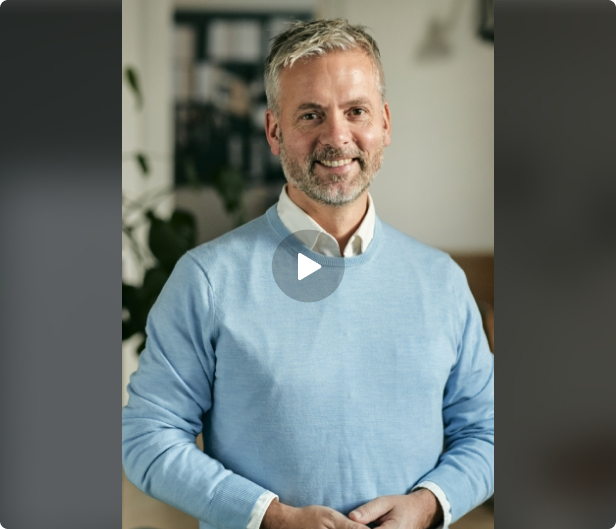
In this short video, I explain how I work with couples when autism is part of a relationship crisis, and why clear words and a calm pace matter so much.
You can also send me an email
Acute autism couples therapy Copenhagen supports couples with an autistic partner, or two autistic partners, when the relationship is close to collapse. Overload, crossed wires, shutdowns or a major life change may have brought you here. Sessions last two hours with breaks and take place in English or Danish, in person in central Copenhagen or online.
Together we reduce the pressure, practise plainer communication and settle on changes that suit both nervous systems. This service belongs to acute neurodiverse couples therapy, which sits under acute couples therapy in my wider couples therapy work.
You can request a free discovery call, book a session, review my client policy or contact me directly.
Acute autism couples therapy Copenhagen is for couples where one or both partners are autistic and the relationship is in crisis right now. Overload, misunderstandings and shutdowns have pushed you close to breaking point. You want quick support that takes both of your minds seriously.
This service is aimed at couples in crisis where autism sits at the heart of things. If another line below fits better, follow its link.
You can also send me an email
The reviews shown here are shared by clients who have worked with me in therapy and chosen to reflect on their experience. They are collected via Google and displayed through an independent verification service, offering an open and transparent picture of how my work is experienced.
“When a couple sits down with me in the first week after a shock, and autism is part of the picture, they often arrive convinced that they no longer love each other. Most of the time, love is not the problem. Translation is. Underneath, one partner is asking ‘Why don’t you ever show me you care?’, while the other is asking ‘Why is what I do never enough?’. Sometimes one partner wants to be held and needs to be left alone in the very same moment. When couples learn each other’s language, the relationship often has far more in it than either of them thought.”
Mark Colclough, MA, psychotherapist and EFT couples therapist
I am Mark Colclough, MA, a psychotherapist and EFT couples therapist specialising in expats and international couples. I work in English and Danish, from my practice in central Copenhagen and online.
Practising since 2004, I bring a bicultural perspective to work with individuals and couples across languages and cultural contexts. My work integrates depth-oriented psychotherapy with approaches such as integral psychotherapy, Gestalt therapy, Jungian psychoanalysis, and object relations theory. I also have specialist training in attachment theory, narcissism, and borderline personality disorder.
For support with life between cultures, explore expat psychotherapy or expat couples therapy. My practice is supported by ongoing training and supervision. To read more about my background, training, and approach, visit About me.

I regularly meet with experienced senior psychotherapists in Denmark and abroad to reflect on my work, challenge my thinking, and continue developing my skills. This ongoing process supports the quality of my individual and couples therapy, helping me offer thoughtful, ethical, and effective care.
My focus is simple: excellence, integrity, and impact.
If you want me to call you ASAP, or if you want to book me, use the buttons below.
You are welcome to get in touch. We can clarify what’s the right therapy for you.
You can also send me an email
Henrik is autistic and Camilla is not. Since Henrik was made redundant, he spends his days at home sorting the same cupboards and reacts sharply to any change in plans. Camilla feels shut out and keeps trying to talk, and Henrik shuts down. After a dinner party ended with him leaving early without a word, she said she was thinking of moving out.
In our first session, Camilla hears how much Henrik has lost with his job, and Henrik hears how alone Camilla has been. By the end, they have a written weekly plan, a fixed ten-minute daily check-in and one simple word Henrik can say when he needs to step away. Nothing is solved yet, but the house is quieter that week.
I have presented this clinical example as a compound of 22 years of clinical practice.
You care deeply about each other, but right now you keep missing each other, and both of you are exhausted.
Couples usually reach me at a point where autism and a current crisis have become tangled together. Typically one partner feels emotionally alone, while the other feels constantly criticised for not reading signals they cannot see.
In my experience, both partners are usually trying hard. They are simply speaking different languages, and nobody has given them a dictionary.
A new baby, a job loss, a move or an illness can remove the routines an autistic partner relies on. What looks like coldness or stubbornness is often a nervous system that has lost its footing.
We look at what the change has taken away and what structure could bring some steadiness back.
An autistic partner may answer the exact question asked, while the other partner was really asking something else. Each walks away hurt and confused.
I help you slow these moments down and find where the meaning slipped, so neither of you has to guess.
Sitting side by side, one of you may feel content and the other may feel completely alone. Both experiences are real.
We look at what closeness means to each of you, and how you can offer it in ways the other person can actually feel.
When a talk goes on too long or gets too loud, an autistic brain may shut down or melt down. The other partner may then push harder, or feel abandoned.
I help you agree on a pause, a signal and a time to come back, so hard conversations can end before they break you both.
Touch, sex, noise at home or invitations from friends can turn into a running conflict when sensory needs clash with the wish for closeness.
We look at these differences calmly and openly, without either partner being made to feel wrong.
A diagnosis in adulthood can bring relief, grief and anger all at once. Suddenly, years of arguments look different.
I help you make sense of the past together, without using the diagnosis as a weapon or an excuse.
Recognise yourselves here? Request a call or book a session, and the first thing we tackle is the most painful part.
You can also send me an email
Your journey is unique, and you do not have to walk it alone.
Fill out your contact information and I will call as soon as possible.
Support when you need it most.
Your message is treated confidentially and used only to respond to your enquiry. It is not sold or used for advertising. Please avoid including detailed or highly sensitive clinical information in this form. Information about processing, service providers and retention is available in the privacy policy.
Understanding autism is a start. The real change happens in how you speak, pause and repair at home.
We look at how sensory load, processing time, routines and different ways of showing love play out between you. From there, we build a small number of agreements that are realistic for your household.
The fight may seem to be about chores, sex or a forgotten anniversary. Underneath, one partner often feels unloved and the other feels unfairly judged. I help you each see what the other is really carrying.
Yes. Most couples can learn the early signs: shorter answers, a fixed stare, a need to leave the room. Together you choose a calm signal, and a plan for the minutes after it is used.
Yes. We practise saying what you need in plain, kind sentences, instead of hoping it will be noticed. Many couples are surprised how much warmer clear words can be.
We look at practical ways to give an autistic partner the quiet or space they need, while still making sure the other partner gets warmth and attention. Both needs count.
Repair starts when the hurt partner can say how lonely it has been, and the other can hear it without feeling attacked. I structure that conversation so it stays safe for both of you.
Usually, it means fewer misunderstandings, a home that feels calmer, clear ways to pause and some shared time that suits both of you. Many couples then move on to steadier autism couples therapy.
You can also send me an email
You do not need a diagnosis, the right words or a plan. You only need to come, both of you.
Early on, I hear each of you out, sketch the pattern that keeps catching you and help you cope with the days ahead. Should another service fit better, I say so openly.
You attend together for a two-hour meeting with pauses built in. We go over the lead-up to the crisis, the shape of a difficult day for each of you and your most pressing needs. You leave with a short written list of next steps.
I tell you at the start how the session will run, keep my questions concrete and give you time to think. We can adjust the light, the seating and the pace, and take breaks whenever needed.
Once overload episodes have become rarer and talking no longer tips either of you over, we slow the rhythm and turn to the longer-standing patterns.
Early on, meetings come in quick succession. When home life settles, the intervals lengthen.
Predictability matters, especially for autistic partners. Booking a bundle fixes your dates in advance and lowers what each session costs. The bundle cards further down list the choices.
Hard conversations end before they explode, you both feel a little more understood, and the house feels safer. At that point, we plan the next phase together.

Weighing your options? This table sets this page beside the closest ones.
| Option | Choose it when | Pace |
|---|---|---|
| Acute autism couples therapy (this page) | You are at breaking point and autism is a big part of why. | Two-hour meetings with pauses, frequent early on |
| Autism couples therapy | Autism shapes your relationship, and things are difficult but not acute. | Two-hour meetings at an even pace |
| Acute neurodiverse couples therapy | Several neurotypes are involved, or you cannot tell which. | Two-hour meetings with pauses |
| Acute autism couples therapy alone | You are at breaking point and your partner refuses to attend. | One-hour individual meetings |
It is time-limited help for couples with one or two autistic partners whose relationship is at breaking point. First we ease overload; next we untangle the communication patterns underneath; finally we agree concrete changes. I offer it in English or Danish in central Copenhagen.
No. Autism shapes how someone communicates and copes, but both partners shape the relationship. Each of you has a part in the pattern, and neither of you is cast as the problem.
No. Some couples arrive with a formal assessment, others with a strong hunch. Either is fine, because the work is about your shared everyday life.
That happens more often than people think. Two autistic partners can understand each other deeply and still clash over routines, space or sensory needs. I shape each session so it works for two autistic people.
Autism and ADHD often occur together. If both are clearly present, acute AuDHD couples therapy may suit you better. If ADHD is the main issue, look at acute ADHD couples therapy.
Yes. Some couples find it easier to write down what has happened beforehand. A short email helps me prepare, and it means you do not have to explain everything on the spot.
You can begin on your own with acute autism couples therapy alone, which focuses on your side of the relationship while your partner stays away.
That varies a great deal. A crisis that has built up over years usually needs longer than a sudden one. Each session ends with a short review of where you are.
A 2-hour couples therapy session costs 3,700 DKK including VAT. You can see all current prices on my prices page. If you expect several sessions, therapy discounts and bundles save you 10 per cent. Online sessions cost the same and last just as long.
Book the first available session directly, or request a free 30-minute call if you want to talk first. If a phone call feels hard, write to me instead.
If nothing in the calendar is soon enough, send me a message with a few lines about your situation.
You can also send me an email
My mission is to help individuals, couples and families rediscover connection, communicate with understanding, and build a stronger, more loving relationship that can thrive through any challenge.
My vision is to create a world where every person in my therapy room feels supported, connected, and empowered to grow, and to step one step closer to your Self.

Join the newsletter and receive five practical tips for nurturing healthy relationships – with yourself and the people around you.
No spam. Just mindful insights.
I have designed this website to offer you a private, ad-free experience. Your personal data is never used, sold or shared with third parties. A few cookies are necessary for the site to work. If you say yes to helping me, I would also like to use one or two that show how the site is used, so I can improve its flow and content for you. It is completely pseudonymous, which means it does not identify you by name.
Please fill out this information and I’ll contact you soon. I use your details to reply to your enquiry, talk through practicalities and, if you wish, book a session. Please do not write sensitive information in the message field.
Clicking the button adds your email address to my mailing list. Please read the Privacy Policy for more information.
P.S. I’ll call you in a bit!
